I’ve been thinking about where I am in my own monomyth.
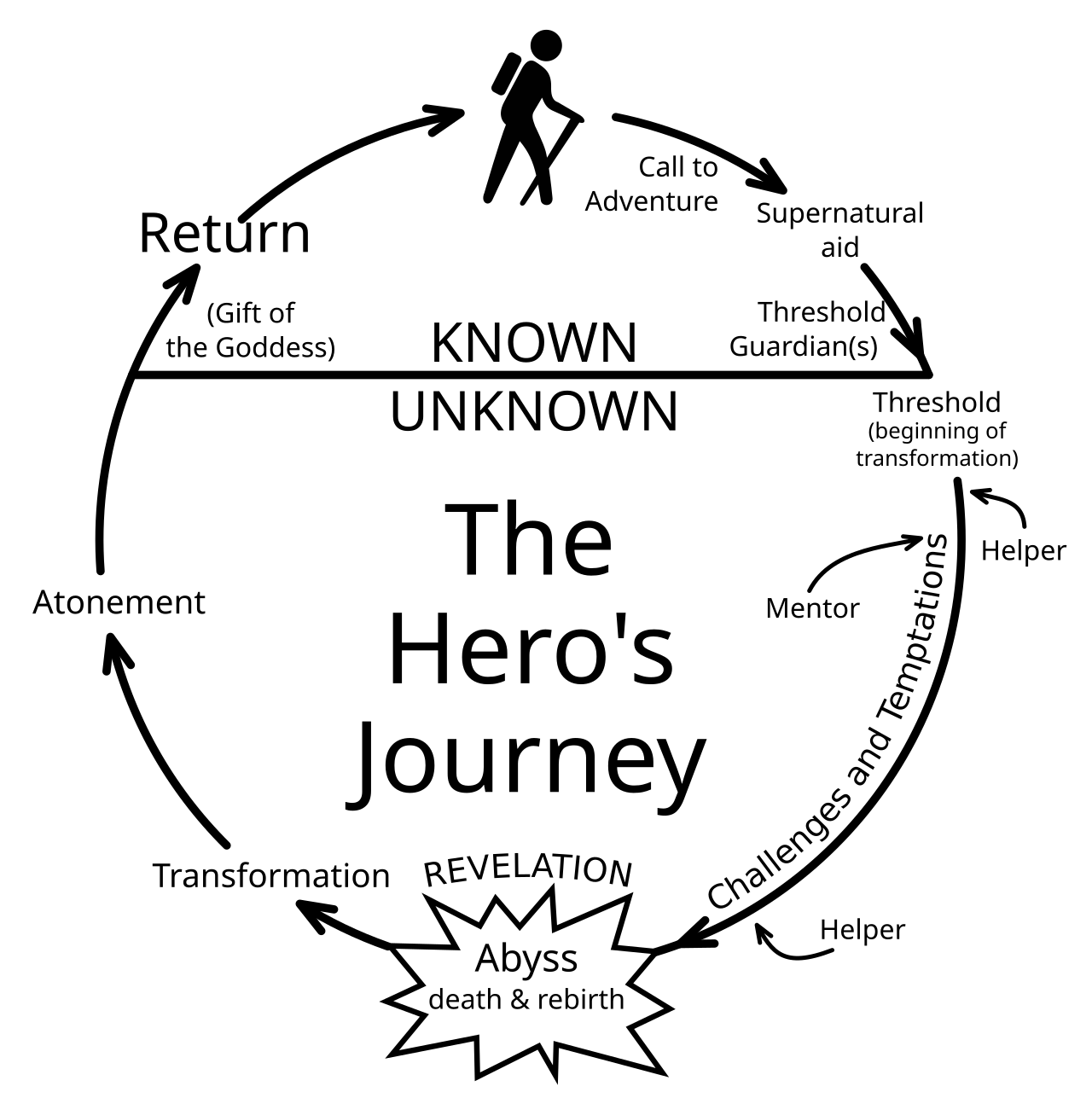
Joseph Campbell’s conception of the hero’s journey, explored in The Hero with a Thousand Faces, has three great movements: departure, initiation and return. We tend to romanticize departure and dramatize initiation, but I am beginning to suspect that the return may be the most complicated movement of all.
I left Alabama at eighteen. What followed were decades of adventure, love, fatherhood, ministry, intellectual discovery, political struggle, beautiful encounters, painful departures and the occasional dark night of the soul.
I have lived several lives within this one life.
And now, in my fifties, I find myself back in the geography of my childhood, navigating the strange terrain of beginning again.
The paradox of the return
The paradox of the return is that the very journey that makes coming home meaningful also makes it impossible to come home in quite the same way.
How do you return to a world that helped form you but that you also had to leave in order to become yourself? How do you honor your roots without surrendering the freedom you acquired in your wandering? How do you belong without becoming smaller?
There are things about Alabama that nourish something deep within me and things that remind me why I needed to leave. I carry both an affection for this place and a certain estrangement from it. I am simultaneously native and stranger, insider and outsider, returning son and pilgrim.
And then there is the more intimate tension of returning at this particular moment in my life.
One imagines the returning hero arriving triumphant, bearing treasures, possessing wisdom, having resolved the great conflicts of his existence. But what happens when the traveler returns with wounds as well as wisdom, questions as well as revelations, unfulfilled longings as well as hard-won gifts?
What happens when coming home also means beginning again?
There is a peculiar vulnerability in rebuilding a life in one’s fifties. Holding the accumulated weight of memory alongside the uncertainty of new beginnings. Grieving certain futures that will never materialize while remaining open to possibilities one could not have previously imagined.
I am learning to love again. To dream again. To make peace with certain endings without becoming captive to them. To receive tenderness without suspicion and possibility without fear.
The gifts we bring home
In the monomyth, the traveler returns bearing a boon—something acquired through the ordeals of the journey that might become a gift to others.
Perhaps part of my work in this season is discerning what I have brought back with me. What wisdom has been distilled from my wounds? What gifts have been cultivated in my wildernesses? What might the soil of Alabama receive from the man it sent into the world decades ago?
But there is another tension here. I have spent much of my adult life understanding myself through vocation, service, struggle and responsibility. What would it mean to embrace a season in which my own flourishing is not subordinate to some larger mission?
Can I allow myself to be a recipient of the very grace, liberation and abundance I have spent so much of my life proclaiming for others?
There is a life to be lived. Love to be enjoyed. Beauty to be savored. God to be encountered in the quiet ordinariness of my days.
Learning to belong without becoming smaller
Perhaps the task of the return is integration: learning to hold together the boy who left and the man who has returned, the public and the intimate, the prophetic and the contemplative, the longing for belonging and the necessity of freedom.
I do not want to spend the remainder of my life trying to recover a world that no longer exists. Nor do I want to remain perpetually in exile from the place that first taught me how to inhabit the world.
I want to discover whether it is possible to be rooted without being confined, to belong without betraying myself, and to make a home spacious enough for all that I have become and all that I have yet to become.
The great irony of my journey may be that after decades of venturing into the unfamiliar, my most demanding adventure awaits me in the familiar.
The return is not the end of the journey.
It is its own initiation.


Leave a Reply